Why Strategic Intuition Is the Last Skill AI Cannot Automate
Everyone is asking how to use AI. Nobody is asking what to protect from it. That is the more important question.
There is a question that almost nobody in marketing is asking right now. Not because it is difficult — it is actually quite simple. But because the answer is uncomfortable, and we have collectively decided to focus on the exciting version of the AI conversation instead.
The question is this: when AI can do everything you currently do, what will you have left?
Most marketers are busy answering a different question — how do I use AI? How do I write better prompts? Which tools should I adopt? These are reasonable questions. But they are the wrong ones to be asking first. They are tactical questions dressed up as strategic ones. And in the rush to answer them, we are overlooking the more important inquiry: what, in the work that I do, is genuinely irreplaceable?
The Execution Gap Has Already Closed
For most of marketing history, the value of a marketer was bundled. You hired someone who could write, think, analyse, present, and execute — because those capabilities were inseparable. The strategist and the executor lived in the same body. That bundle justified the salary.
AI has systematically unbundled that package. Today, execution is cheap. Copy can be generated in seconds. Campaigns can be structured and launched with minimal human input. Data can be summarised, interpreted, and presented automatically. The execution gap — the distance between having an idea and implementing it — has effectively closed.
This is not a future threat. It is a present reality. The question is not whether AI will automate marketing execution. It already has. The question is what that leaves behind for humans to do — and whether the answer is "more of the same, faster" or something categorically different.
The execution gap has closed. What remains is the direction gap — and that is not closing any time soon.
What Execution Cannot Contain
Here is what I have observed after seven years of running campaigns across Meta, Google, e-commerce platforms, and content channels: the difference between a good campaign and a great one is almost never in the execution. The ads are technically fine. The targeting is reasonable. The copy is correct. And yet something is missing.
What is missing is almost always a judgment call that was never made. A question about who we are actually talking to and what they actually care about right now — not in aggregate, but in this moment, in this cultural context, with this specific relationship to the product. A decision about what not to say. A call about timing that no amount of historical data could have predicted. A creative leap that required someone to sit with a blank page and decide to go somewhere unexpected.
These are not execution tasks. They are not prompting tasks. They are not even strategy tasks in the conventional sense. They are acts of judgment. And judgment — real judgment, under real uncertainty, with real consequences — is the one thing that AI cannot simulate, however convincingly it might appear to.
AI is extraordinarily good at recognising patterns and producing outputs consistent with those patterns. That is, in fact, its defining capability. But strategy — real strategy — often requires breaking the pattern. It requires looking at what everyone else is doing and deciding to do the opposite. It requires reading a situation that has never quite occurred before and making a call that no training data could have prepared for.
The Three Irreducible Human Capabilities
I want to be precise here, because vagueness about "human skills" is one of the ways we avoid the uncomfortable specificity of this conversation. So let me name the three things that I believe are genuinely irreplaceable — not as philosophical abstractions, but as practical capabilities that marketers exercise every day.
1. Contextual judgment under uncertainty
Every significant marketing decision involves incomplete information. You do not know how the audience will respond. You do not know what a competitor will do next week. You do not know whether the cultural moment is right for a particular message. You make a call anyway — and you own the consequences.
AI can narrow the uncertainty. It can model scenarios, surface precedents, and calculate probabilities. But it cannot make the call. More precisely: it can produce a call, but it cannot own one. And ownership — the willingness to stake your judgment, to be wrong, to learn — is what transforms information into strategic action.
2. The creative leap
The best marketing ideas do not come from optimisation. They come from a moment of genuine human creativity — an unexpected juxtaposition, an honest observation, a willingness to say something that most brands are too careful to say. These moments cannot be prompted into existence. They require a mind that is wandering, connecting, noticing — and that has something at stake.
AI generates creative output constantly. But there is a difference between generation and origination. AI recombines what it has seen. Human creativity, at its best, produces something that could not have been predicted from the training data. That gap — however narrow it is becoming — is where the highest-value creative work lives.
3. Reading the room
One of the most underrated marketing skills is the ability to sense when something is wrong before the data tells you. To sit in a briefing and notice that the client is not actually saying what they mean. To look at a campaign performance report and feel that something does not add up, even when the numbers look fine. To understand that the cultural moment has shifted in a way that makes last month's messaging suddenly tone-deaf.
This is not instinct in some mystical sense. It is pattern recognition built on years of experience, combined with a quality of attention that AI cannot replicate — because AI is not present in the way a human is present. It does not feel the weight of the room. It does not notice the pause before the answer. It cannot read the silence.
The Risk of the Middle Position
Here is what concerns me most about the current moment. The professionals at highest risk are not the ones at the extremes — not the pure executors who will be displaced quickly, and not the genuine strategists whose value is clear. The highest risk is in the middle.
The middle is where most experienced marketers live. They are too senior to be pure executors. But they have not yet made the explicit choice to become strategists. They use AI to do more of what they already do, faster. They adopt the tools, improve their productivity, and present the same kind of output — just at greater volume and lower cost.
The problem with this position is that it accelerates the commoditisation of their own work. If your value proposition is that you can produce marketing output efficiently, you are competing on the same dimension as AI — and that is a competition you will eventually lose. Not because you are not good. Because good is not the point anymore. The point is: what do you do that AI genuinely cannot?
The Director Framework
The professionals who will thrive in the agentic AI era are not the ones who use AI most — they are the ones who use it most strategically. They are Directors: they set the objective, brief the AI, review the output with a critical eye, make the judgment calls, and own the results. The execution is delegated. The direction is not.
What Strategic Intuition Actually Looks Like
I want to end with something concrete, because I am aware that "strategic intuition" can sound like a convenient abstraction — a soft skill dressed up in important-sounding language.
Strategic intuition is not a mysterious gift. It is a developed capability. It is what happens when you have made enough decisions, in enough different contexts, with enough skin in the game, that you start to recognise patterns that are not visible in the data. When you have been wrong enough times to know the difference between a genuine signal and noise. When you have watched enough campaigns succeed and fail to sense, before you launch, which way this one is likely to go.
It is built through experience — but not just any experience. It requires the kind of experience that involves real decisions, real consequences, and real reflection on what happened and why. You cannot develop strategic intuition by optimising other people's campaigns with no stake in the outcome. You develop it by owning calls, being wrong, figuring out why, and making better calls the next time.
That is why the professionals who will matter most in the next decade of marketing are not the ones who are most comfortable with AI. They are the ones who are most uncomfortable with uncertainty — and have learned to act decisively in spite of it. They use AI to handle everything that can be handled. And they protect, fiercely, the part of their work that cannot be.
The question is not whether you will use AI. You will. Everyone will. The question is whether, when the execution is automated, there will be anything distinctly yours left standing.
That is the question worth asking. And it is the one nobody wants to sit with.
Frequently Asked Questions
What is strategic intuition in marketing?
Strategic intuition in marketing is the developed capability to make sound judgments under uncertainty — reading situations that data cannot fully capture, sensing when something is wrong before the metrics show it, and making creative decisions that no amount of optimisation could produce. It is built through years of experience, real decisions, and genuine consequences. It is not a gift or a personality trait. It is a skill that compounds over time.
Why can't AI automate strategic intuition?
AI is extraordinarily good at recognising patterns in existing data and producing outputs consistent with those patterns. Strategic intuition, however, often requires breaking the pattern — making calls in situations that have never quite occurred before, reading a room that cannot be quantified, and owning consequences that AI cannot bear. AI can narrow uncertainty. It cannot make decisions under it, and it cannot own the results.
What human skills will AI not replace?
The three human capabilities most resistant to AI automation are: (1) Contextual judgment under uncertainty — the ability to make and own decisions when information is incomplete; (2) The creative leap — originating ideas that could not have been predicted from any training data; and (3) Reading the room — sensing shifts in context, culture, and human dynamics that no dataset captures in real time.
What is the Director Framework for AI in marketing?
The Director Framework is an approach to working with AI where the human acts as the Director — setting the objective, briefing the AI, reviewing its output critically, making all judgment calls, and owning the results. Execution is delegated to AI. Direction, strategy, and accountability remain with the human. This positions AI as a powerful execution tool rather than a replacement for strategic thinking.
How do marketers protect their value in the age of AI?
Marketers protect their value in the AI age by moving deliberately from execution to direction — using AI to handle everything that can be automated, while developing and protecting the capabilities AI cannot replicate: strategic judgment, creative originality, contextual awareness, and the ability to make decisions under genuine uncertainty. The professionals at highest risk are those in the middle — too senior to be pure executors, but who have not yet made the explicit choice to become strategists.
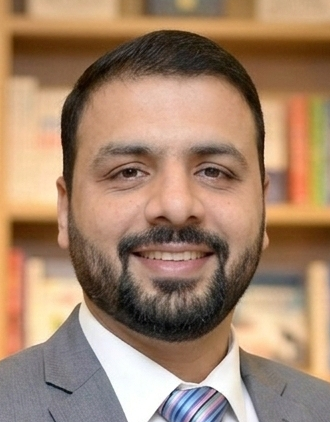
Mujeeb Rehman
Digital Marketing Consultant & AI Strategist · MSc Digital Marketing, Distinction — Robert Gordon University
7+ years running paid media, SEO, and growth strategy for e-commerce and service businesses. Author of The Last Human Skill. Currently available for consultancy and senior marketing roles in the UK.
From the book
The Last Human Skill — Strategic Intuition in the Agentic Age
The book that goes deeper on everything in this essay.